
Welcome to the Milonga (Social Dance)
What is a Milonga
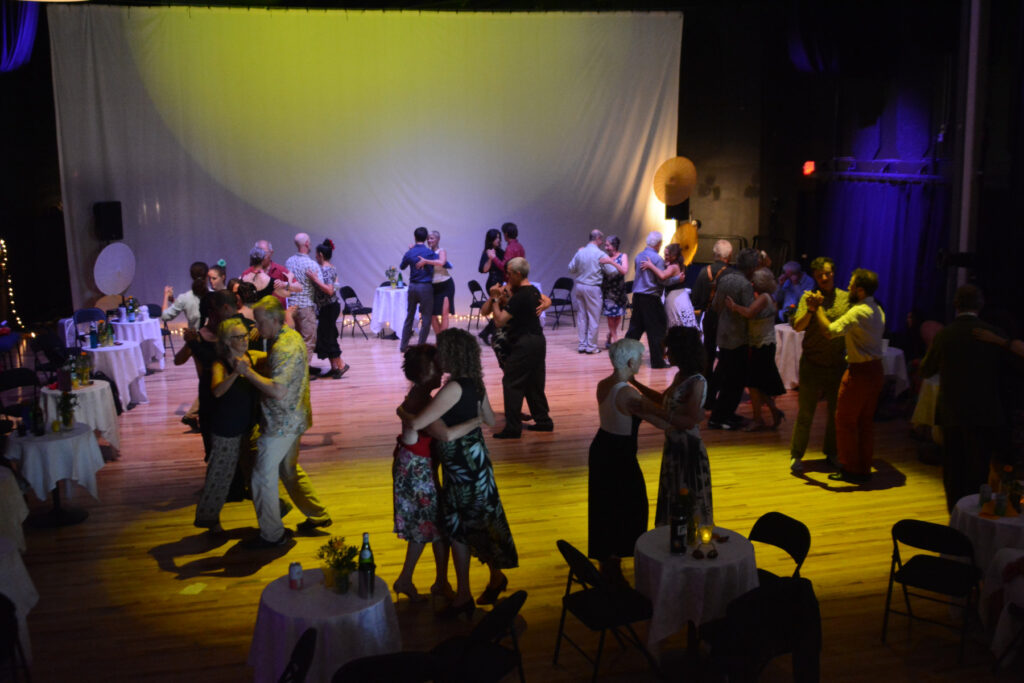
A milonga is an Argentine tango social dance.
People come to the milonga to dance, socialize, and watch the dancers.
This page will explain what you may experience at the milonga. From the what to wear to milonga etiquette, this is your resource to get ready for an Argentine Tango Social Dance.
Come to our next milonga…
Intro Class
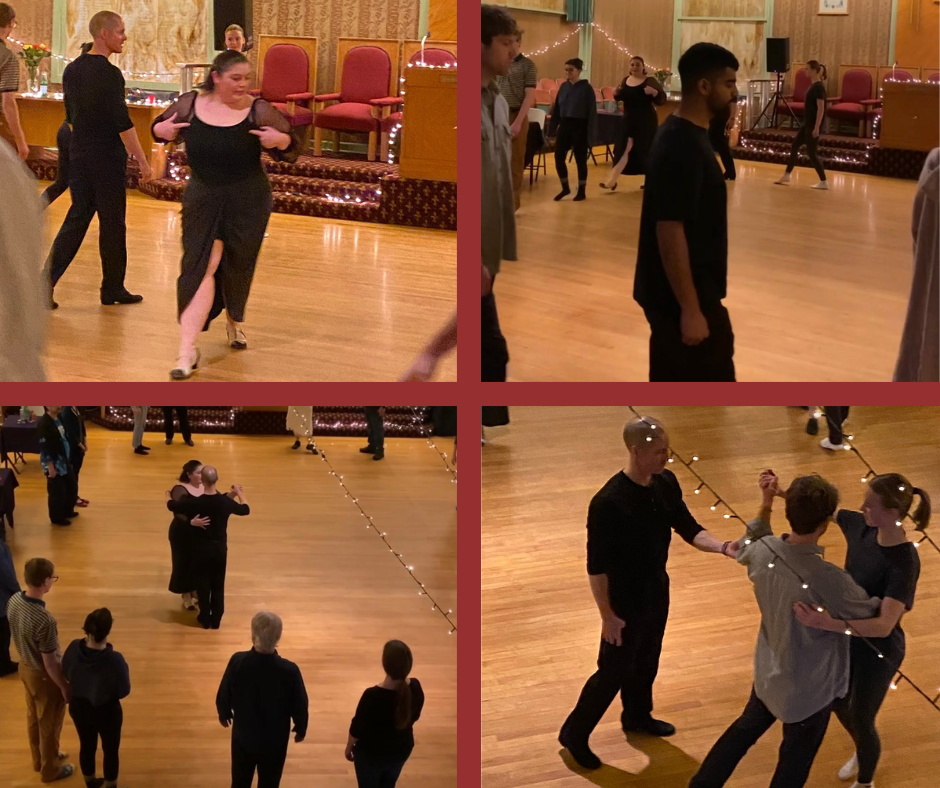
Many milongas (including ours) have an intro to tango/beginners class the hour before the milonga starts. This class is free with entry to the milonga, you can come with a partner or on your own, and no experience is required.
The instructors of the class will guide you through the basics of Argentine tango like connecting with your partner, walking, how to navigate the dance floor, and basic etiquette. All instructors teach the intro class a little differently and may include different elements, but no matter what, by the end of class you will be ready for your first milonga.
Experienced dancers also like to attend the intro class to meet new people and to assist beginners.
What to Wear
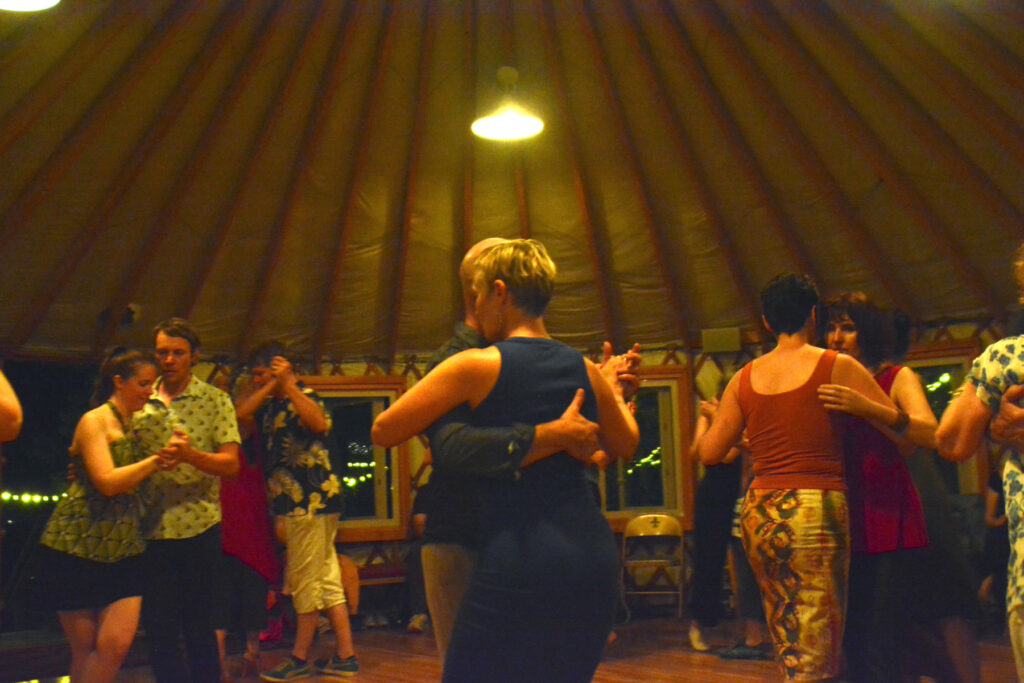
Different milongas have different dress codes. In most milongas in MT you are welcome to wear whatever you feel comfortable in. Many people choose to use the milonga as a chance to dress up but many also choose to dress down. If you look through the photos on this page you will see a wide range of clothing. The most important thing is that you can easily move and dance in whatever clothes you choose to wear.
For footwear: If you have dance shoes bring them, they are not required but are very helpful. If you do not have dance shoes you can choose to dance in socks or street shoes but we recommend that you clean street shoes well so that you don’t drag dirt onto the dancefloor as it can ruin dance shoes. If you would like to learn more about dance shoes click here.
The Tango Missoula Second Saturday Milonga
Date: Every second Saturday of the month
Time: Intro Class 7:00PM-8:00PM, Milonga 8:00PM-11:00PM
Location: Hellgate Elks Club, 112 N Pattee St, Downtown Missoula
Cost: $12 Students/$15 General
(If you would like to volunteer at set up or at the door for a free pass, email tangomissola@gmail.com)
Part of how we sustain a thriving Argentine tango community in Missoula is to host a monthly social dance! All are welcome to attend our milonga at any dance level. If you have never danced tango before, come at 7:00 to learn the basics. We hire DJs from around the region, have mid milonga mixer dances, and occasionally have performances. For milonga announcements, follow @tangomissoula on Facebook and Instagram, subscribe to our monthly newsletter that comes out the Monday prior to the milonga, or subscribe to our google calendar. Many life-long dancers began their tango journey at the milonga and we hope you will too!
Community Milongas
The Tango Missoula Second Saturday Milonga is not the only dance around, check out these other milongas in Missoula and nearby:
Bitterroot Tango Milongas: Learn More
Montana Moonlight Studios Friday Practilonga: Learn More
Missoula Fourth Sunday Matinee Milonga: Learn More
Butte Tango First Saturday Milonga: Learn More
Tango Helena third Saturday Milonga: Learn More
Kalsipell Tango Fourth Saturday Milonga: Learn More
Post Falls Follow My Lead Milongas: Learn More
Argentine Tango Club of Bozeman Practilonga: Learn More
Etiquette
One of the things that makes Argentine tango unique is the etiquette at the milonga. These things will be covered in the intro class but if you are curious here are the basics of Argentine Tango Etiquette:
Hygiene:
Tango is danced with partners close to each other. Because of this make sure to shower and wear deodorant. You know your body, if you know you sweat a lot, consider bringing a handkerchief or even a change of clothes. Milongas often get very warm and it is important to be aware of your personal hygiene.
Cabeceo: How to ask someone to dance
in Argentine tango we use a nonverbal glance, and nod (or cabeceo) to ask someone to dance. Generally this is offered by the leader from some distance away and a follower can choose to accept with a nod, or look away to decline. This may feel foreign at first but once you get the hang of it you may find that it makes asking someone to dance much less awkward. If you are having difficulty, ask an experienced dancer or the host of the milonga to help. You may verbally ask someone to dance but it is considered best form to use the cabeceo.
Ronda: “The Tango Highway”
Argentine tango is dance in a round (or ronda). The dancers always move counter clockwise in a single lane called “the line of dance”. Think of this as the tango highway. To enter the ronda, the couple stands in a corner of the dance floor, the leader meets eyes with the next leader coming to make sure they have room, and then they can enter and begin dancing. Once in the ronda it is important that you do not pass the couple in front of you, think of it as a double yellow line. You also don’t want to take multiple steps backwards as it could cause a crash. If the milonga is crowded couples may form an inner ring or ring(s) of the ronda. You may choose to move into an inner ring for more space, but once you move in you may not move out. These rules keep the dancefloor moving nicely and prevent accidents between couples.
Tandas: A set of Dances
Once you have agreed to dance with someone via the cabeceo, you have signed up for a set of songs (or tanda). All the songs in a set will be by the same orchestra and or have similar styles. In Montana we often play sets of 3 songs but in larger events 4 is common. Generally if you say yes to dancing with someone you are saying yes to the whole tanda. However if you are uncomfortable at any time you may leave the dance floor. You will know the tanda is ending when you hear a curtain song (or cortina) it will sound vastly different then the rest of the songs. For example, imagine hearing 3 songs by Beethoven (the tanda) and then a song by Led Zeppelin (the cortina). The cortina gives time for the couples to exit the dance floor before the next set starts. Bonus: “the thank you rule” a quirky rule of tango is to only say thank you when you are finished dancing with someone. Aka if you say thank you after the second song your partner may think you are wanting to be done dancing with them.
Talking: Let The Dance Speak For Itself
In general, once the dance has begun partners do not talk. It takes a lot of concentration to dance tango as it is a completely improvised dance. Between songs or after a tanda feel free to socialize and talk as much as you like.
Still have more Questions?
Check out our “Getting Started” or our “Frequently Asked Questions” pages or reach out to us at tangomissoula@gmail.com